Explaining the INES scale
General information:
The INES (International Nuclear and Radiological Event Scale) scale -at least for me it doesn't feel right to call it just INES and it's like how one might say RBMK reactor- was created by the IAEA and OECD in 1990 as to communicate information to the public about nuclear accidents/incidents, such as its health and environmental effects. The accidents/incidents are rated on a logarithmic state, like earthquakes and the pH value, where each level portrays an event ten times severe than the previous ones, however it is highly dependable to the opinion of the ranker. It is comprised of a zero level, three incident levels (levels 1-3), and four accident levels (levels 4-7). The classification is based on the effects of the fallout, such as on the people of the environment, the spread of the radioactive material inside the nuclear installation, and the function of the safety measures.
The representation of the INES scale. Wikipedia uses the same picture.
Criticism/Exceptions:
Not all out-of-the-ordinary events can be ranked on the INES scale as they pose no hazards. Examples include the discovery of a suspicious item in the USA in San Onofre NPP on 5/3/1999, a tornado sighting within the area of the H.B. Robinson NPP in the USA on 29/9/1999, and a chemical explosion at the nuclear fuel complex of Hyderabad in India on 17/11/2002.
The main criticisms of the scale include:
- The 1986 Chernobyl accident and the 2011 Fukushima accident being both at the same level, as Chernobyl had much grander consequences compared to Fukushima, which was only at the same level as Chernobyl because the events of the affected reactors were combined into one accident.
- The scale is very inconsistent and often the the INES scores are not reflected.
- Many events lack an INES rating.
- It is not an objective scientific scale, more so to for the public who does not know much about nuclear incidents and accidents.
- Magnitude and intensity are conflated, meaning that serious accidents (e.g. core meltdowns) with no serious contamination can be at the same level as accidents with significant contamination (e.g. Lucens in Switzerland and Windscale in the UK).
David Smythe, a nuclear safety expect, has proposed the Nuclear Accident Magnitude Scale (NAMS) as a better alternative to the INES scale after the Fukushima accident in 2011. It is defined by the equation NAMS = log10(20 × R), with R being the radioactivity released in terabecquerels. Only external contamination affects the score, thus any accidents resulting in only internal contamination or water pollution receive an automatic score of zero. Some of the incidents listed are Chernobyl in 1986 at M=8, Kyshtym in 1957 at M=7.3, Fukushima in 2011 at M=7.5, and Three Mile Island in 1979 at M=7.9.
There is also the classification scale of the NRC.
- Unusual Event/Notification Of Unusual Event (NOUE) - Small problem with no radiation release.
- Alert - Actual/potential degradation in the level of the facility's safety, threat to facility personnel, damage to equipment. Radioactive releases are limited.
- Site Area Emergency (SAE) - Major failures in the facility posing risk to the public.
- General Emergency - Most serious problem. Substantial core damage or meltdown or loss of control by facility personnel. Site Area Emergency
- Tokaimura, Japan - fire in nuclear waste volume reduction facilities (13/2/2006)
- Atucha, Argentina - reactor shutdown (17/12/2006)
- Krško, Slovenia - primary cooling circuit leak (4/6/2008)
- Eurajoki, Finland - reactor shutdown (10/12/2020)
- Tricastin, France: leak of water containing unenriched uranium into the environment (07/2008)
- Gravelines, France: during a fuel bundle exchange, one of the fuel bundles snagged onto the structure of the reactor (8/8/2009)
- Penly, France: leak of the primary circuit after extinguishing a fire (5/4/2012)
- Hunterston B, UK: discovery of cracks in the graphite bricks (2/5/2018)
- Sellafield, UK: loss of ventilation (15/5/2016), contaminated water flowing into a concrete compound (1/3/2018), fallen liquid levels in a concrete sump tank (2019)
- Gundremminger, Germany: rapid shutdown of the reactor (13/1/1977)
- Hunterson B, UK: emergency diesel generators failed to start after grid failures (12/1998)
- Shika, Japan: criticality incident due to dropped control rods (18/6/1999)
- Blayais, France: flood (27/12/1999)
- Forsmark, Sweden: backup generator failure (25/7/2006)
- Ascó, Spain: radioactive contamination (4/4/2008)
- Sellafield, UK: two incidents of overexposure (2017) and contamination due to a leak in the legacy storage facility (2019)
- Vandellòs, Spain: shutdown of the reactor following a destructive fire (19/101989)
- Davis-Besse, USA: corrosion of the carbon steel reactor head (3/2002)
- Paks, Hungary: fuel rod damage (10/4/2003)
- Sellafield, UK: contained leak of a highly radioactive solution in the THORP plant (9/5/2005)
- Fukushima, Japan: loss of coolant in the first, second and fourth units of the Fukushima Daini NPP (11/3/2011)
- Tokaimura, Japan: criticality accident at a fuel reprocessing facility killing two workers (30/9/1999)
- SL-1, USA: reactor reaching prompt criticality, killing three workers (3/1/1961)
- Saint-Laurent, France: partial core damage (17/10/1969) and partial core damage after the graphite overheated (13/3/1980)
- Lucens, Switzerland: blocked coolant channel led to the melting and ignition of a fuel assembly, there was no exposure (21/1/1969)
- Jaslovské Bohunice, Czechoslovakia (now in Slovakia): partial core damage with minor release of radiation (22/2/1977)
- Andreev Bay, USSR (now in Russia): leak of highly radioactive water due to damage to a spent fuel storage facility (2/1982)
- Buenos Aires, Argentina: criticality accident in research reactor, one operator died and two others were injured (23/91983)
- Mayapuri, India: an irradiator was sold for scrap (26/2/2010)
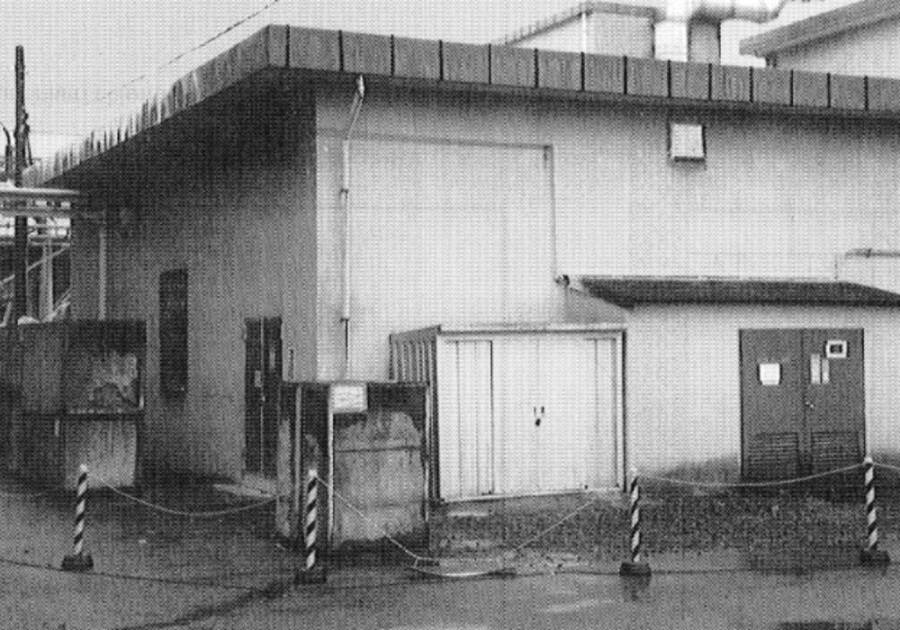
- Chalk River, Canada: damage to reactor core (12/12/1952)
- Windscale, UK: fire caused by the annealing of the graphite moderator, releasing radioactive dust and killing 100 to 240 people due to cancer (10/10/1957)
- Three Mile Island, USA: small break LOCA due to design and human error, the radioactive release is unknown and thus any injuries and illnesses are only estimates (28/3/1979)
- Goiânia, Brazil: cesium chloride was sold as scrap resulting in four deaths and the contamination of 249 people (13/9/1987)
- Kyshtym/Mayak, USSR (now in Russia): an explosion equivalent to 70 to 100 tons of TNT was caused due to the failed cooling system of a nuclear reprocessing facility belonging to the military. At least twenty two villages faced evacuation (29/9/1957)

- Chernobyl, USSR (now in Ukraine): design flaws during a turbine rundown test resulted into explosions and fire, resulting in a 30km exclusion zone around the reactor, thirty one direct deaths (two from injuries, one from cancer, twenty five from radiation) and possibly 4000 to 27000 more victims, the exact number is unknown (26/4/1986)
- Fukushima, Japan: damage to the power and containment systems due to earthquake and tsunami resulting in a leak. No deaths attributed to radiation poisoning, one death from cancer. There is a temporary exclusion zone of 20km around the NPP (11/3/2011)


Comments
Post a Comment